

Table of Contents
- The Real Cost of Premium Automatic Pet Feeders
- Best Smart Pet Feeders With Camera: What You're Paying For
- Automatic Pet Feeder Reliability: Battery Backup and Power Outage Performance
- How to Choose an Automatic Pet Feeder: Key Features That Justify the Investment
- Durability, Maintenance, and Long-Term Value
- Portion Control and Pet Weight Management Benefits
- Is the Investment Worth It? A Data-Driven Verdict
- Frequently Asked Questions
Last Updated: September 29, 2026
The automatic pet feeder market is growing rapidly, with the smart pet feeder segment expected to reach USD 533.3 million by 2035. But market size doesn't answer the question that matters most: are expensive pet feeders worth the investment?

This guide breaks down the real value proposition of premium automatic feeders, examining what you're paying for, which features justify the cost, and when a budget option suffices. The answer depends on your lifestyle, your pet's needs, and your peace of mind.
The Real Cost of Premium Automatic Pet Feeders
Premium automatic pet feeders typically range from $100 to $300, while budget models start around $30. According to Pawspik's 2026 consumer pricing analysis, the price difference reflects material quality, smart features, and reliability. But here's what most reviews miss: the cost-benefit analysis changes dramatically based on your situation.
A busy professional traveling three to four days weekly gains genuine value from consistent feeding schedules and remote monitoring. Someone with a flexible work-from-home schedule might find a basic feeder adequate.
Premium models include stainless steel construction, Wi-Fi connectivity, app-based scheduling, and video monitoring. Budget models offer mechanical timers and plastic bowls. The real question is whether features align with your specific needs.
Best Smart Pet Feeders With Camera: What You're Paying For
Smart pet feeders with video capability extend far beyond the camera itself. The Pet Feeder For Cats 6L Automatic Feed Dispenser With Camera from Mac & Ellies pet shop ($73.96) combines WiFi connectivity, app-based portion control, and real-time video monitoring, bridging budget and premium options.
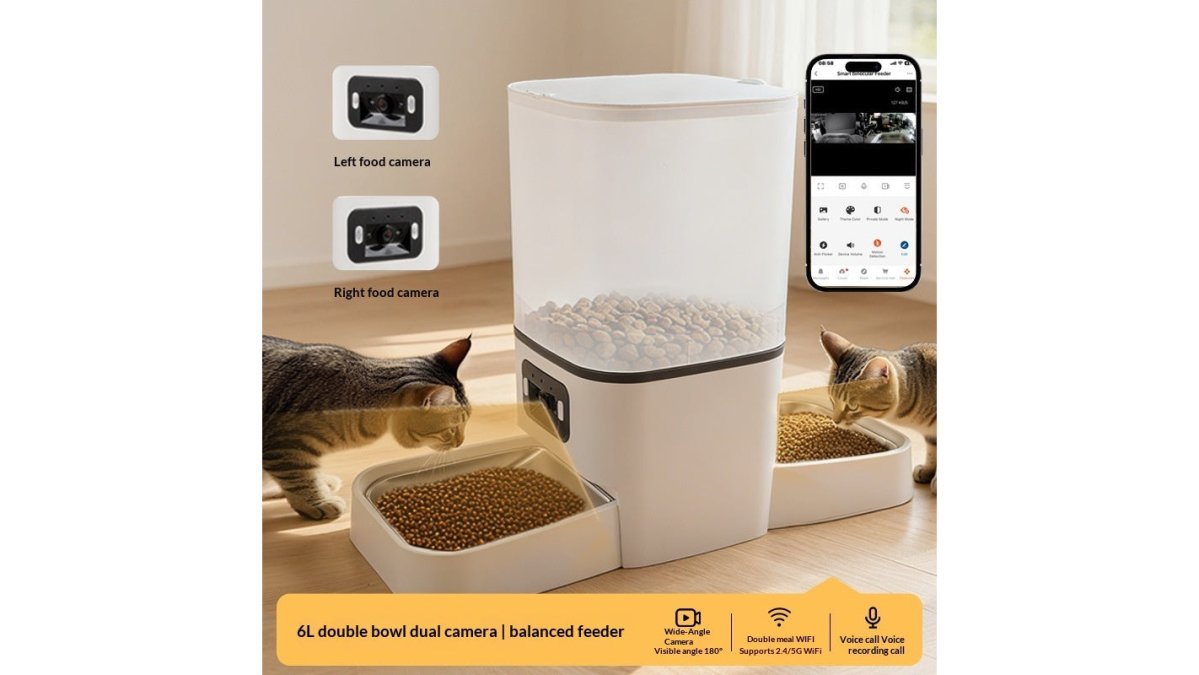
What the camera actually does. Video-enabled models serve three purposes: portion verification, behavioral monitoring, and peace of mind during absences. For anxious pet owners, this psychological benefit justifies the premium. However, utility depends entirely on app reliability and streaming quality.
Data privacy and app security, the hidden cost. WiFi-enabled pet feeders collect feeding times, portion sizes, video footage, and sometimes location data, creating privacy implications most owners don't consider.
Budget smart feeders often use generic cloud infrastructure with minimal encryption. Premium feeders typically employ end-to-end encryption, local storage, and transparent privacy policies. A budget feeder's video might be stored on unencrypted servers; a premium feeder encrypts footage locally.
Check the manufacturer's privacy policy before purchasing. Key questions: Where is video stored? Who can access it? Is encryption end-to-end? Can you delete footage? Budget manufacturers often have vague policies; premium manufacturers provide detailed documentation.
Smart home integration and ecosystem lock-in. Premium feeders integrate with Amazon Alexa, Google Home, and Apple HomeKit, enabling voice commands and automation. However, a feeder locked to one platform becomes less valuable if you switch ecosystems.
The Mac & Ellies Smart Pet Automatic Feeder Water Feeder ($126.12) includes video and voice features for separation anxiety management. Voice control raises privacy concerns: Is the microphone always listening? Can it be disabled? Is audio encrypted?

Reliability of WiFi-dependent features. Some high-end models lack battery backup despite premium pricing. A power outage combined with network downtime means you lose both feeding and monitoring. Budget models with mechanical timers continue functioning without WiFi.
The tradeoff with camera-equipped feeders. They require consistent WiFi, regular app updates, and manufacturer server availability. When manufacturers discontinue apps or shut down servers, smart features become useless. This has happened with multiple pet tech products.
When smart features justify the premium. Video monitoring genuinely helps if you're managing separation anxiety in your pet, need to verify eating behavior for medical reasons, or want to catch signs of stress during your absence. The psychological benefit is real. But that benefit only materializes if the system is reliable, your data is protected, and the app continues functioning for years. Premium pricing should reflect these guarantees, not just the camera hardware.
Automatic Pet Feeder Reliability: Battery Backup and Power Outage Performance
Reliability separates expensive automatic pet feeders from budget alternatives more than any other factor. According to Persistence Market Research's 2026 automatic pet feeder market analysis, reliability and power backup are the top considerations for frequent travelers.
Premium feeders include redundant power systems: AC power plus battery backup. When power fails, your pet eats. Budget models rely on single-point power with no backup.
Pet Feeder For Cats 6L Automatic Feed →
A 12-hour power outage while away means a missed feeding on budget feeders. On premium models with battery backup, nothing changes.
The Mac & Ellies 304 Stainless Steel Wireless Plug-Free Pet Water Fountain ($156.05) operates on battery power with wireless capability, eliminating wall outlet dependence and removing a failure point.

How to Choose an Automatic Pet Feeder: Key Features That Justify the Investment
Selecting an automatic pet feeder requires evaluating five core features. Not all of them demand premium pricing, but understanding which ones do prevents overpaying.
Portion control precision. Expensive feeders dispense in 0.1-ounce increments. Budget models often dispense in half-cup portions. For pets requiring strict weight management, precision matters. For average healthy pets, it doesn't.
Scheduling flexibility. Premium models allow up to 10-15 meals daily with individual timing. Budget models typically offer 1-4 preset schedules. Frequent travelers benefit from flexibility; home-based owners rarely need it.
Material durability. Stainless steel bowls last 5-10 years. Plastic bowls degrade after 2-3 years. If you plan to keep the feeder long-term, stainless steel justifies its cost through longevity alone.
Dry food compatibility. Most automatic feeders handle standard kibble.
| Feature | Budget Feeders | Premium Feeders | Impact on Price |
|---|---|---|---|
| Portion Control | Half-cup increments | 0.1-ounce precision | $30-50 difference |
| Scheduling | 1-4 presets | 10-15 meals daily | $20-40 difference |
| Bowl Material | Plastic | Stainless steel | $15-30 difference |
| Battery Backup | None | 12-24 hours | $40-80 difference |
| Video Monitoring | No | Yes, with app | $30-60 difference |
| Total Price Range | $30-60 | $100-300 | Varies by features |
Durability, Maintenance, and Long-Term Value
Expensive automatic pet feeders justify their cost through durability and repairability, a dimension most reviews ignore entirely. A $200 feeder lasting seven years costs $29 annually. A $50 feeder lasting two years costs $25 annually, but you're replacing it three times over that period, plus the cumulative hassle of setup, configuration, and adaptation to new models.
Warranty coverage reveals manufacturer confidence.
Portion Control and Pet Weight Management Benefits
Pet obesity affects one in three pets in the United States. Automatic feeders address this through consistent portion control and scheduled feeding, justifying premium pricing for many owners.
Is the Investment Worth It? A Data-Driven Verdict
The answer depends on three factors: your travel frequency, your pet's health needs, and your budget tolerance.
Frequently Asked Questions
What features justify the price of a high-end automatic pet feeder?
Premium feeders offer video monitoring, programmable timers for consistent feeding schedules, stainless steel construction for durability, battery backup for power outages, and app-based portion control. The Pet Feeder For Cats 6L with camera ($73.96) includes WiFi connectivity and dual-port feeding, while the Smart Pet Automatic Feeder Water Feeder ($126.12) combines both food and water dispensing. These features prevent pet obesity, reduce separation anxiety, and provide peace of mind for travelers, justifying the investment over basic gravity feeders.
Are expensive pet feeders more reliable than budget models?
Higher-priced automatic feeders typically feature better build quality, stronger dispensing mechanisms that resist clogging or jamming, and reliable battery backup systems. Premium models maintain consistent feeding schedules even during power outages, while budget alternatives often lack backup power. Stainless steel bowls (like those in Mac & Ellies' adjustable feeder at $22.60) resist corrosion and spoilage better than plastic, extending the feeder's lifespan and ensuring food freshness.
Do veterinarians recommend automatic pet feeders for portion control?
Yes. Automatic feeders with programmable timers help establish consistent feeding schedules that support weight management and prevent pet obesity. The ability to dispense precise portions throughout the day, rather than free-feeding, is particularly valuable for pets prone to overeating. Video-enabled feeders let owners monitor actual consumption patterns, providing data to share with veterinarians. This makes premium feeders a practical tool for managing pet health, especially for busy professionals who cannot feed their pets at regular intervals.
What happens if the WiFi drops or the app crashes while I'm using a smart feeder?
Quality smart feeders include mechanical backup systems and battery power to continue dispensing food on their programmed schedule even if connectivity is lost. The Smart Pet Automatic Feeder Water Feeder ($126.12) operates independently of app connectivity once the schedule is set. However, you lose remote monitoring and emergency feeding capability during outages. This is why checking battery backup specifications and choosing feeders with strong durable construction is critical, your pet's meals should not depend entirely on technology.
How long do expensive automatic pet feeders typically last before needing replacement?
Premium feeders with stainless steel components and quality dispensing mechanisms often last 5-7 years with proper maintenance. Plastic feeders may fail sooner due to wear on the impeller assembly or food clogging issues. Regular cleaning prevents jamming and extends lifespan significantly. Durable construction, like the 304 stainless steel used in Mac & Ellies' water fountain ($156.05), resists corrosion and maintains performance longer than cheaper plastic alternatives, making the higher upfront cost more economical over time.
0 comments