

Table of Contents
- Why Consistent Pet Feeding Schedules Matter
- Dog Feeding Schedule by Age
- How Often to Feed a Dog: Frequency and Portion Control
- Cat-Specific Feeding Routines and Multi-Pet Schedules
- Changing a Dog's Eating Schedule: Best Practices
- Using an Automatic Pet Feeder Schedule for Consistency
- Monitoring, Adjusting, and Troubleshooting Your Pet's Schedule
- Frequently Asked Questions
Last Updated: October 13, 2026
Why Consistent Pet Feeding Schedules Matter
A consistent pet feeding schedule is the foundation of a healthy, well-adjusted pet.
Pets thrive on predictability. An irregular feeding schedule creates stress, which manifests as excessive barking, destructive behavior, or inappropriate elimination. Beyond behavior, consistency directly impacts your pet's metabolism and weight management.
The challenge, of course, is that life rarely cooperates. Work schedules change, travel happens, and unexpected commitments pop up. This is where maintaining consistent pet feeding schedules becomes genuinely difficult for busy professionals.
Dog Feeding Schedule by Age
Your dog's nutritional needs and feeding frequency change dramatically across their lifespan. Understanding these stages prevents both overfeeding and underfeeding, two common mistakes that lead to obesity, nutrient deficiencies, or digestive upset.
Puppy feeding: Birth to 12 months
Puppies require frequent meals because their stomachs are small and their energy needs are enormous. From 8 weeks to 3 months, feed four times daily, spacing meals 4-6 hours apart.
Portion sizes for puppies should follow your food manufacturer's guidelines based on expected adult weight. A common mistake is eyeballing portions, use a measuring cup and weigh food on a scale if precision matters to you.
During the transition between feeding frequencies, overlap for 3-5 days.
Adult dog feeding: 1 to 7 years
Most adult dogs thrive on twice-daily feeding. This schedule aligns with natural canine behavior and allows for consistent meal timing that works with typical human schedules.
Portion sizes depend on your dog's weight, activity level, and the calorie density of your chosen food. The back of most commercial dog food bags provides feeding guidelines by weight.
Some owners ask whether one large meal or two smaller meals is better. Two meals are preferable because they distribute nutrients throughout the day and reduce the risk of bloat, a serious condition in large breeds.
Senior pet feeding: 7+ years
Senior dogs often need dietary adjustments around age 7. They typically require fewer calories because their metabolism slows and activity levels decline. However, they may need higher-quality protein to maintain muscle mass and joint support.
Feeding frequency can remain twice daily, but some senior dogs benefit from three smaller meals if they experience digestive upset or have difficulty eating large portions. Watch for changes in appetite, weight loss, or difficulty chewing, these signal a need for dietary adjustments or veterinary evaluation.
How Often to Feed a Dog: Frequency and Portion Control
The frequency of feeding your dog depends on several factors beyond age alone. Body size, breed, activity level, and individual metabolism all influence the ideal feeding schedule.
Feeding frequency by body size and breed
Toy breeds and small dogs often have faster metabolisms and may benefit from three meals per day even as adults, particularly if they're prone to low blood sugar. Medium breeds typically do well on twice-daily feeding.
Active dogs, those who work, compete in sports, or spend hours playing, may need additional meals or snacks to maintain energy and muscle.
Breed-specific considerations matter too. Some breeds are prone to bloat and should never eat one large meal. Others have slower metabolisms and need careful portion management.
Measured portions and daily food allowance
Guessing portions is how most weight problems start. Use a measuring cup or kitchen scale to determine exact portions.
Calculate your dog's daily calorie needs based on their weight and activity level. Most adult dogs need roughly 25-30 calories per pound of body weight per day, though active dogs may need 40+ and sedentary dogs may need 20 or fewer.
Track what you feed. Write down portions, treats, and any table scraps. Many owners underestimate how much they're actually feeding because treats and table food add up quickly.
Cat-Specific Feeding Routines and Multi-Pet Schedules
Cats have fundamentally different feeding needs than dogs, and maintaining consistent pet feeding schedules for multiple pets requires intentional planning.
Cats are obligate carnivores with different nutritional requirements than dogs.
The challenge with cats is that they're often more anxious about feeding changes than dogs.
For multi-pet households, feeding in separate locations prevents food competition and allows you to monitor each pet's intake.
The Mac & Ellies pet shop team recommends the Pet Feeder For Cats 6L Automatic Feed Dispenser With Camera for cat owners managing irregular schedules.
Changing a Dog's Eating Schedule: Best Practices
Life happens. You change jobs, move, or your routine shifts. When your dog's feeding schedule needs to change, do it carefully to avoid digestive upset and behavioral regression.
Start by identifying why the change is necessary. Are you moving to a new work schedule? Traveling frequently?
Pet Feeder For Cats 6L Automatic Feed Dispenser With Camera →
Make schedule changes gradually. If you're moving from 7 AM and 6 PM to 8 AM and 7 PM, shift by 15 minutes every 2-3 days.
Watch for signs of stress during the transition: decreased appetite, loose stools, anxiety, or behavioral changes.
Using an Automatic Pet Feeder Schedule for Consistency
Automatic feeders solve a fundamental problem: they deliver meals on schedule regardless of your location or availability. For busy professionals, shift workers, and frequent travelers, they're transformative.
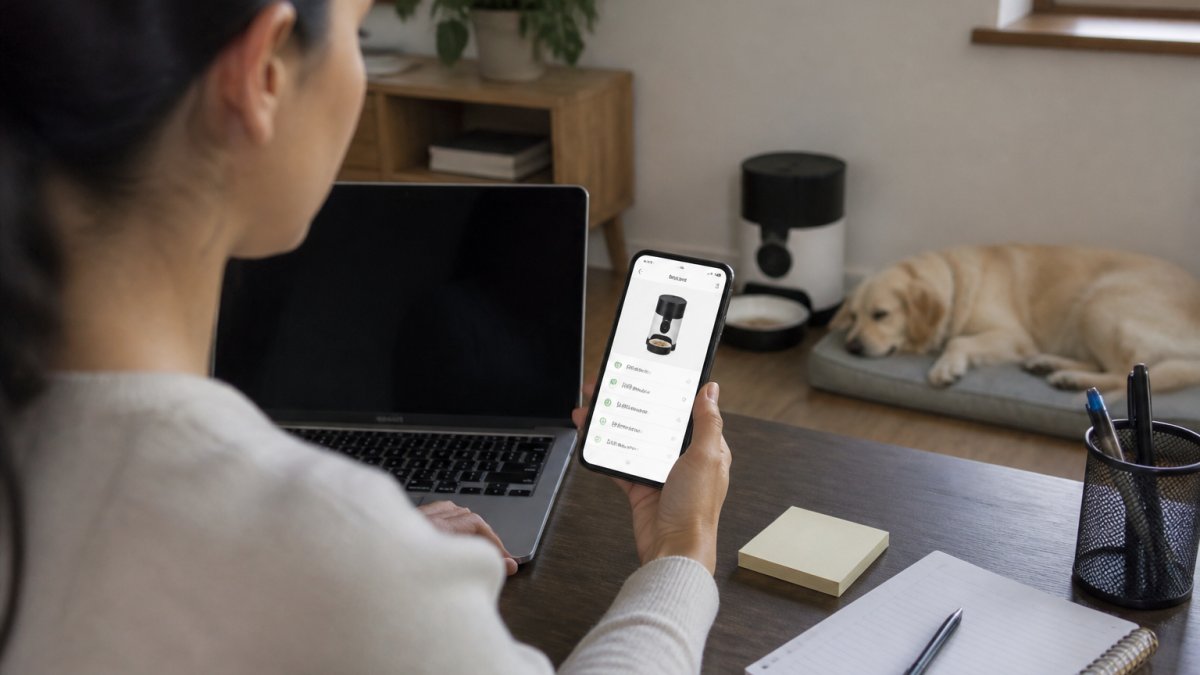
An automatic feeder removes the guesswork from portion control and timing. You program the feeder to dispense a specific amount at specific times, and it executes flawlessly every day.
The best automatic feeders offer programmable schedules that accommodate multiple meals per day.
Video-enabled feeders for remote monitoring
Video-enabled feeders add a layer of peace of mind that standard feeders can't match. You can watch your pet eat, confirm they're actually consuming their food, and even interact remotely through two-way audio.
The Smart Pet Automatic Feeder Water Feeder includes video capability so you can monitor your pet's eating behavior in real time.
Video feeders also address a common concern: does my pet actually eat, or do they just stare at the bowl? With video confirmation, you know.
Scheduling meals when you work irregular hours
Shift work, travel, and unpredictable schedules make consistent feeding nearly impossible without automation. An automatic feeder solves this by maintaining your pet's schedule even when yours is chaotic.
If you work rotating shifts, program your feeder for your pet's ideal meal times, not your availability. Your dog needs meals at 7 AM and 6 PM regardless of whether you're home. An automatic feeder ensures this happens.
For frequent travelers, an automatic feeder with video monitoring is essential.
Monitoring, Adjusting, and Troubleshooting Your Pet's Schedule
Monitor your pet's body condition monthly. Take photos from the side and above to track visual changes.
Track appetite changes carefully. A sudden decrease in interest in food, or conversely, increased hunger, can signal illness.
Adjust portions based on life changes.
Common problems and solutions:
| Problem | Likely Cause | Solution |
|---|---|---|
| Pet leaves food in bowl | Portion too large, food quality issue, or health problem | Reduce portion size, try different food, consult vet |
| Increased hunger or weight gain | Underestimating treats, food quality too low in nutrients | Measure all food and treats precisely, evaluate food quality |
| Digestive upset during schedule change | Transition too rapid | Extend transition period to 7-10 days |
| Pet anxious at feeding time | Inconsistent timing, food competition, or anxiety disorder | Maintain strict schedule, separate multi-pet feeding, consider calming aids |
| Feeder malfunction | Device failure or programming error | Check power and settings, contact manufacturer support |
If your pet shows signs of illness, vomiting, diarrhea, lethargy, or behavioral changes, consult your veterinarian before adjusting the feeding schedule.
Maintaining consistent pet feeding schedules isn't about rigid perfection, it's about giving your pet the structure they need to thrive.
Frequently Asked Questions
Is it okay to feed my dog once a day?
Feeding once daily is generally not recommended for most dogs. Adult dogs typically thrive on two meals per day spaced 8-12 hours apart, which supports stable energy and digestion. Puppies require three to four meals daily, while senior pets may benefit from smaller, more frequent meals. Single daily feeding can lead to hunger, behavioral issues, and increased risk of bloat in large breeds. Consult your veterinarian about your dog's specific needs based on age, size, and health status.
How can I keep my pet's feeding schedule consistent when I work irregular hours?
Automatic pet feeders are designed for exactly this challenge. Video-enabled feeders let you dispense meals remotely via smartphone, maintaining your pet's routine even during shift work or travel. Set scheduled meal times in the app, and the feeder dispenses portions automatically. This prevents your pet from experiencing anxiety or hunger during unpredictable hours. Backup power options ensure meals are delivered even if WiFi fluctuates. Products like the Pet Feeder For Cats 6L with camera ($73.96) or Smart Pet Automatic Feeder Water Feeder ($126.12) offer both scheduling and remote monitoring for peace of mind.
Can an automatic pet feeder help maintain a regular feeding routine?
Yes. Automatic feeders eliminate guesswork by dispensing exact portions at preset times, creating a consistent routine your pet's digestive system can rely on. This consistency reduces anxiety, stabilizes appetite, and supports better weight management. Pets thrive on predictable schedules, and automatic feeders enforce that reliability even when your household routine varies. Video-enabled models add monitoring capabilities, so you can confirm your pet ate and adjust portions based on their response. This combination of automation and oversight makes maintaining a feeding schedule far easier than manual feeding alone.
How should feeding schedules change as pets get older?
Feeding frequency and portions shift across life stages. Puppies eat three to four times daily in small amounts to support rapid growth. Adult dogs (1-7 years) typically eat twice daily. Senior pets (7+ years) often benefit from smaller, more frequent meals to aid digestion and maintain steady energy. Older pets may also need adjusted calorie intake and different food types to support joint health and reduce digestive strain. Life-stage nutrition becomes increasingly important as pets age. Your veterinarian can recommend specific adjustments based on your pet's body condition, activity level, and any health concerns.
What's the best way to transition my pet to a new feeding schedule?
Gradual transitions prevent digestive upset and behavioral resistance. Introduce the new schedule over 7-10 days by slowly shifting meal times in 15-30 minute increments. If changing food brands simultaneously, mix increasing amounts of the new food into the old over the same period. Monitor appetite, energy, and digestion during the transition. Pets with anxiety may resist schedule changes initially; consistent reinforcement and patience help them adjust. If your pet shows signs of stress, consult your veterinarian before continuing. Automatic feeders can ease this process by maintaining precise timing even as you adjust the schedule.
How do I know if my pet is eating the right amount for their feeding schedule?
Monitor your pet's body condition, energy level, and digestion to assess whether portions match their schedule. A healthy pet should have a visible waist, ribs you can feel but not see prominently, and stable energy throughout the day. Portion size depends on age, body weight, activity level, and the calorie content of your pet's food. Your veterinarian can calculate daily calorie needs and recommend portion sizes based on your pet's specific profile. Keep a simple feeding log to track what you're serving and how your pet responds. Adjust portions gradually if your pet seems constantly hungry or is gaining weight unexpectedly.
Is 8 p.m. too late to feed a dog?
An 8 p.m. feeding time is not inherently too late, but it depends on your dog's sleep schedule and your household routine. Most dogs do well with meals spaced 8-12 hours apart. If you feed at 8 p.m. and let your dog outside before bedtime, a late dinner can work fine. However, feeding very close to sleep may cause discomfort in some dogs, particularly large breeds prone to bloat. Ideally, allow 2-3 hours between the final meal and rest. If your dog needs a later dinner due to your work schedule, an automatic feeder ensures the meal is dispensed on time regardless of your availability, and monitoring via video confirms your pet ate without stress.
What should I do if my pet won't eat at the scheduled feeding time?
A pet skipping a meal occasionally is usually not urgent, but consistent refusal warrants attention. First, rule out environmental stress, changes to food, or water quality issues. Ensure the feeding location is quiet and free from distractions. If your pet has separation anxiety, video-enabled automatic feeders can help by allowing remote interaction during meals. Some pets eat better when their owner is present; others do better alone. If appetite loss persists beyond 24 hours, especially in senior pets or those with health conditions, contact your veterinarian. Sudden appetite changes can signal illness, dental problems, or digestive issues requiring professional evaluation.
0 comments