

Table of Contents
- Understanding the Dog Surgery Recovery Timeline
- Post-Operative Activity Restriction and Crate Rest
- Incision Site Monitoring and Wound Care
- How to Keep a Dog Calm After Surgery
- Pain Management and Medication Administration
- Best Dog Sling for Senior Dogs and Mobility Support
- When to Call the Vet After Dog Surgery
- Creating a Calm Recovery Space at Home
- Frequently Asked Questions
Last Updated: September 26, 2026
Understanding the Dog Surgery Recovery Timeline
Your dog's recovery begins the moment anesthesia wears off. The first week after surgery is when your dog's body heals fastest, and when complications are most likely to emerge. Understanding the dog surgery recovery timeline helps you catch problems early and support healing effectively.
The First 24 Hours: Post-Anesthesia Transition
The first day home is disorienting for your dog. Anesthesia lingers in their system, causing drowsiness, confusion, and sometimes mild nausea. Your dog may stumble, seem uncoordinated, or refuse food, all normal responses.
Days 2-7: The Critical Healing Window
By day two, your dog should be more alert. Appetite typically returns gradually, start with bland food in small portions. The incision site begins the inflammatory phase, which looks worse before it gets better. Mild swelling and redness are normal; excessive discharge or opening sutures are not.
Post-Operative Activity Restriction and Crate Rest
Activity restriction is non-negotiable for proper dog surgery recovery. Your dog's instinct to move, play, and explore works against healing. Controlled confinement isn't cruel, it's medical necessity.
Crate rest prevents:
- Suture rupture from sudden movement
- Increased bleeding at the surgical site
- Swelling that delays healing
- Infection from contaminated incisions
Incision Site Monitoring and Wound Care
Check the incision site twice daily. You're looking for signs of proper healing and early warning signs of infection. A healthy incision shows:
- Minimal swelling by day 3
- Pink or reddish tissue (not dark red or purple)
- Dry or slightly moist surface
- Sutures or staples intact and close together
Concerning signs include:
- Increasing swelling or redness after day 2
- Discharge (especially pus or blood)
- Separation of sutures or staples
- Warmth around the incision
- Foul odor
Keep the incision clean and dry. Most veterinarians recommend avoiding water contact until sutures are removed. If the area gets dirty, gently wipe with a clean, damp cloth, don't scrub. The Yegbong Pet Care Spray from Mac & Ellies is formulated for post-operative wound care and can help maintain cleanliness without harsh chemicals.

How to Keep a Dog Calm After Surgery
Keeping your dog calm during recovery is harder than it sounds. Pain, confusion, and restricted movement create frustration. An anxious dog is more likely to damage their incision or develop behavioral problems during recovery.
Mental Enrichment During Restricted Movement
The biggest mistake owners make is assuming crate rest means zero stimulation. Your dog's mind still needs activity, even if their body can't. Boredom and frustration lead to destructive behavior, excessive licking, and anxiety.
Offer appropriate enrichment:
- Puzzle feeders or treat-dispensing toys (keeps mind engaged for 15-20 minutes)
- Long-lasting chews like bully sticks (provides calming activity)
- Sniff games with hidden treats in blankets (mental exercise without physical exertion)
- Training sessions with low-impact tricks (mental stimulation, strengthens bond)
- Calm music or white noise (reduces stress)
Pain Management and Medication Administration
Your veterinarian will prescribe pain medication and possibly antibiotics. Follow the schedule precisely. Pain medication isn't optional or something to use "only if needed", it's part of the healing protocol.
Best Dog Sling for Senior Dogs and Mobility Support
For senior dogs or those with mobility challenges, a quality sling provides crucial support during recovery. A sling doesn't replace activity restriction, but it allows safe bathroom breaks and controlled movement without risking the incision.
Choose a sling designed for your dog's size and weight. Poorly fitted slings can damage the surgical site or create new problems. The sling should:
Yegbong Pet Care Spray Pet Cat And Dog →
- Support the rear legs or full body (depending on surgery type)
- Distribute weight evenly without pressure on the incision
- Allow your dog's feet to touch ground lightly (for balance, not weight-bearing)
- Be easy to put on and remove without jostling
When to Call the Vet After Dog Surgery
Most post-operative complications emerge within the first 7-10 days. Know the warning signs that require immediate veterinary attention.
Signs of Surgical Complications
Call your veterinarian immediately if you notice:
- Bleeding that doesn't stop with gentle pressure after 5 minutes
- Discharge from the incision (especially pus or foul-smelling fluid)
- Sutures or staples opening or separating
- Swelling that worsens after day 2 or doesn't improve by day 7
- Redness spreading beyond the immediate incision area
- Fever (normal temperature is 101-102.5°F; anything above 103°F is concerning)
- Vomiting or diarrhea lasting more than 24 hours
- Refusal to eat for more than 24 hours
- Difficulty urinating or defecating
- Excessive panting, wheezing, or difficulty breathing
- Collapse, unresponsiveness, or severe lethargy
These signs indicate infection, hemorrhage, or anesthetic complications requiring immediate intervention. Don't wait to see if symptoms improve, call your vet immediately.
Managing Multi-Pet Households During Recovery
Recovering dogs in homes with other pets face extra challenges. A playful housemate can undo surgical healing in seconds. Separation is essential, not optional.
Keep your recovering dog in a separate room for the first 7-10 days. This prevents:
- Accidental collision during play
- Stress from other pets' activity
- Contamination of the incision site
- Disputes over food or toys that cause excitement
Creating a Calm Recovery Space at Home
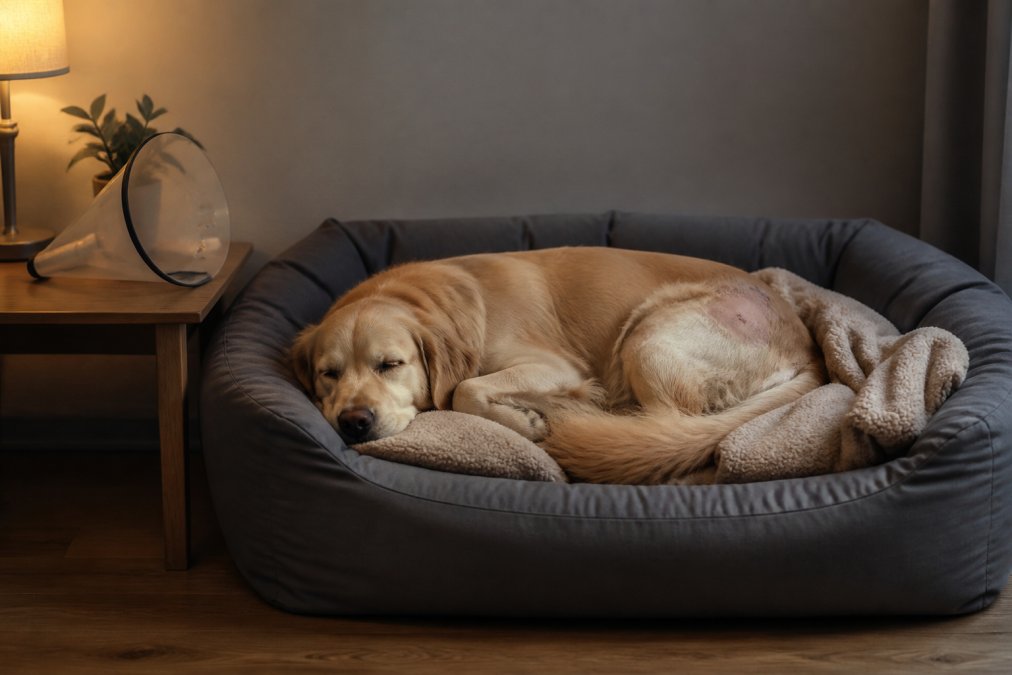
Your home's recovery environment directly affects healing speed and complication risk. A well-designed recovery space reduces stress, prevents accidents, and makes monitoring easier.
| Recovery Phase | Duration | Key Focus | Activity Level |
|---|---|---|---|
| Post-anesthesia transition | 12-24 hours | Rest, hydration, monitoring | Crate rest only |
| Critical healing window | Days 2-7 | Incision care, pain management | Leashed bathroom breaks only |
| Early healing phase | Days 8-14 | Continued monitoring, gradual activity | Supervised short walks |
| Full recovery | Weeks 3-6+ | Gradual return to normal | Progressive activity increase |
Frequently Asked Questions
How long should my dog stay on activity restriction after surgery?
Most dogs require 7-10 days of strict activity restriction following surgery, with many veterinarians extending this to 10-14 days for optimal healing. During this period, crate rest and limited movement prevent stress on the incision site and allow sutures or staples to set properly. Your veterinarian will provide specific timelines based on the surgery type and your dog's individual recovery progress. Follow-up appointments typically occur around day 10-14 to assess wound healing and clear your dog for gradual activity increases.
What does the post-anesthesia transition look like in the first 24 hours?
Dogs typically show initial improvement within 12-24 hours after surgery as anesthesia wears off. However, expect lethargy, disorientation, and reduced appetite during this window. Your dog may seem confused, unsteady, or overly sleepy, this is completely normal. Keep your dog in a quiet, confined space to prevent injury from stumbling. Avoid handling the incision area and monitor for any unusual discharge or swelling. Contact your vet immediately if your dog seems unable to stand, experiences severe vomiting, or shows signs of pain that don't respond to prescribed medication.
How can I tell if my dog's surgical incision is healing properly?
A healing incision should show minimal redness and swelling that gradually decreases over the first week. The wound edges should remain closed with intact sutures or staples, and there should be no discharge, bleeding, or foul odor. Mild swelling and slight redness around the site are normal in the first few days. Use the Yegbong Pet Care Spray to keep the area clean per your vet's instructions. If you notice increasing redness, discharge, opening of the incision, or foul smell, contact your veterinarian immediately, these are signs of infection or improper healing.
When should I call the vet after dog surgery?
Contact your veterinarian immediately if your dog shows fever, excessive swelling, discharge from the incision, opening of the wound, severe lethargy beyond 24 hours, refusal to eat for more than 24 hours, vomiting, difficulty breathing, or extreme pain unrelieved by medication. Also call if your dog hasn't had a bowel movement within 48 hours or shows signs of infection. Don't wait for your scheduled follow-up appointment if something feels wrong, early intervention prevents serious complications. Your vet should provide emergency contact information for after-hours concerns.
How do I keep a dog calm after surgery without using sedation?
Create a quiet, dimly lit recovery space with a comfortable, supportive bed like the Waterproof Dog Bed with Removable Washable Cover to encourage rest. Maintain a consistent routine with scheduled feeding, medication, and bathroom breaks. Provide low-stress mental enrichment like puzzle toys, long-lasting chews, or sniff mats to occupy your dog without physical exertion. Keep other pets and children separated during recovery to reduce excitement. Gentle, calm speaking and minimal handling help maintain a peaceful environment. If your dog shows extreme anxiety, ask your vet about temporary calming supplements or anti-anxiety medication rather than relying on physical restraint alone.
Can a dog sling help with post-surgery recovery for senior dogs?
Yes, a quality dog sling is one of the best dog sling options for senior dogs recovering from surgery, especially those with hip dysplasia or mobility challenges. A sling provides support for rear legs, reduces strain on the surgical site, and helps prevent your dog from jumping or placing weight incorrectly during the critical healing phase. Look for slings with adjustable straps, non-slip materials, and proper weight capacity for your dog's size. A sling is particularly valuable when assisting your senior dog with stairs, getting in and out of vehicles, or moving around the house during the first 7-10 days of recovery.
What should I feed my dog after surgery?
Offer small, bland meals starting 12-24 hours after surgery if your dog shows interest in food. Boiled chicken, plain rice, or a veterinary-prescribed recovery diet are gentle options. Feed smaller portions more frequently rather than one large meal to prevent digestive upset. Ensure fresh water is always available for hydration, but monitor intake to avoid vomiting. Most dogs return to normal appetite within 48-72 hours. If your dog refuses food beyond 24 hours, shows vomiting, or has constipation lasting more than 48 hours, contact your veterinarian, these may indicate complications requiring intervention.
Is it normal for my dog to cry or whine at night after surgery?
Some whining and restlessness are normal as your dog adjusts to pain, medication, and the confinement of recovery. However, excessive crying may signal pain, anxiety, or a complication. Check that your dog is comfortable, has access to water, and doesn't need a bathroom break. Ensure the recovery space is quiet and calm, and consider placing your bed nearby for reassurance if safe. If crying persists despite medication and comfort measures, or if it's accompanied by other signs like fever or incision problems, contact your vet. They may adjust pain management or recommend temporary anti-anxiety support to help your dog rest.
0 comments